Do Biological Age Tests Actually Work? What the Science Says About Epigenetic Age Testing

Biological age tests are becoming increasingly popular in longevity clinics and online health platforms. These tests claim to measure how quickly your body is ageing compared with your chronological age, using biological signals such as DNA methylation and other biomarkers.
But how accurate are they? And can a single test really tell you whether you are ageing well?
The science behind biological age testing is evolving rapidly, but many researchers say the results should still be interpreted with caution.
And the appeal is obvious. In a world that’s increasingly focused on prevention and performance, the idea of quantifying your ageing process is both empowering and seductive. A simple test, a bold number, and the reassurance (or wake-up call) that you’re either thriving or falling behind.
But while the science behind biological age is fascinating, these tests might not be telling you what you really need to know.
What Is Biological Age — and Can It Be Measured?
Biological age tests attempt to estimate how quickly the body is ageing by analysing biological markers rather than relying on chronological age alone. While your chronological age is fixed, your biological age is dynamic. It can be influenced by lifestyle choices, environmental exposures, stress, nutrition, and overall health.
At the heart of most biological age tests is something called epigenetics — the study of how your environment and behaviours affect the way your genes are expressed. Specifically, many of these tests analyse DNA methylation, a process where chemical tags (called methyl groups) attach to your DNA and influence how genes are turned on or off.
These patterns change with age and have been used to build what scientists call epigenetic clocks — algorithms that estimate biological age based on how your gene expression has shifted over time.
In controlled research settings, these clocks are showing real promise. Studies have found that epigenetic age can predict risk of mortality, cardiovascular disease, and certain cancers more accurately than chronological age alone. They’re also sensitive to lifestyle changes: smoking, poor diet, and chronic stress all tend to accelerate epigenetic ageing.
But things get more complicated out of a lab setting.
What the research actually shows
Research in this field is promising. Some studies suggest that biological age estimates may correlate with disease risk and mortality more closely than chronological age.
However, the science is still developing. Different testing companies use different algorithms, different datasets and different biological markers. As a result, the biological age estimate you receive can vary significantly depending on which test you take.
Why biological age test results can vary
While the research is encouraging, biological age tests in their current commercial form still have important limitations, particularly when used at the individual level.
For one, there is variability in results. Studies have shown that two samples from the same person, taken at the same time, can yield different biological age readings, sometimes differing by as much as nine years. That means your result may not be as precise or reliable as it appears.
There is also no universal standard for how biological age is measured. Different companies use different algorithms, data points and lab methods, and most do not disclose exactly how they calculate your biological age. That makes it difficult to compare results or track meaningful changes over time.
But perhaps the biggest limitation is this: knowing your biological age does not tell you why it is higher or lower than expected, or what to do about it.
You might receive a number. You might even get some general lifestyle advice. But you are not being told which systems in your body are under strain. You are not learning whether inflammation, insulin resistance, metabolic dysfunction or hormonal imbalance may be influencing how your body is ageing.
This is one of the key reasons we chose not to include biological age testing in the Biolume platform at this stage.
Why Biolume Health chose not to offer biological age testing (for now)
In 2024, we explored whether biological age testing should be included as part of the Biolume testing ecosystem.
The idea is compelling. A single test that could tell you how quickly your body is ageing compared with your chronological age would be a powerful tool for preventative health. Many longevity clinics and wellness platforms have begun offering these tests, often based on DNA methylation analysis known as epigenetic clocks.
But after reviewing the available evidence, we decided not to include biological age testing in our offering at this stage.
More importantly, the result itself does not explain what is driving that number.
If a biological age test tells you that your body is ageing faster than expected, it does not tell you whether the underlying issue relates to inflammation, metabolic health, cardiovascular risk, hormonal imbalance or another physiological process. Without that context, the number can be interesting but not necessarily actionable.
For now, we believe the most meaningful way to understand how the body is ageing is by looking directly at the biological systems that influence long-term health. Blood biomarkers that reflect cardiovascular health, inflammation, metabolic function and hormone balance provide clearer insight into what is happening inside the body and where meaningful change can be made.
Biological age testing is an area we continue to watch closely. As the science develops and clinical interpretation improves, it may become a more useful tool. Until then, we focus on the markers that already have strong evidence behind them and that can help people make informed decisions about their health.
What more useful ageing signals look like
Instead of relying on a single biological age score, researchers increasingly look at specific biomarkers that influence how the body ages.

Some measures of ageing are simply more actionable than others. Metrics that reflect functional capacity, rather than abstract age, tend to offer clearer direction. Aerobic capacity, often assessed through VO₂ max, is one such example. VO₂ max reflects how efficiently the heart, lungs, blood, and muscles deliver and use oxygen under load, and it consistently correlates with cardiovascular health, resilience, and long-term mortality risk. Unlike a biological age score, it measures capacity, not identity. It does not claim to tell you how old you are. It shows how well your system is functioning — and that capacity can be trained, tracked, and improved.
This distinction matters because when it comes to ageing well, numbers alone do not drive change. Signals do.
If you are still curious, some tests are better than others
For people who are scientifically inclined and interested in self-tracking, biological age tests can still offer value, as long as expectations are clear. Some providers are built with far more scientific rigour than others.
TruDiagnostic and the Elysium Index are two of the more research-driven biological age testing platforms. TruDiagnostic draws on multiple advanced epigenetic clocks widely used in academic research and provides a broader set of ageing-related metrics beyond a single score, including pace of ageing and immune system ageing. Elysium’s Index test uses the DunedinPACE model, which focuses on the rate at which you are ageing rather than estimating a single biological age, based on long-term longitudinal research.
Even so, these biological age tests remain proxies rather than diagnostic tools. They describe trends in ageing biology but do not explain the underlying drivers of those changes.
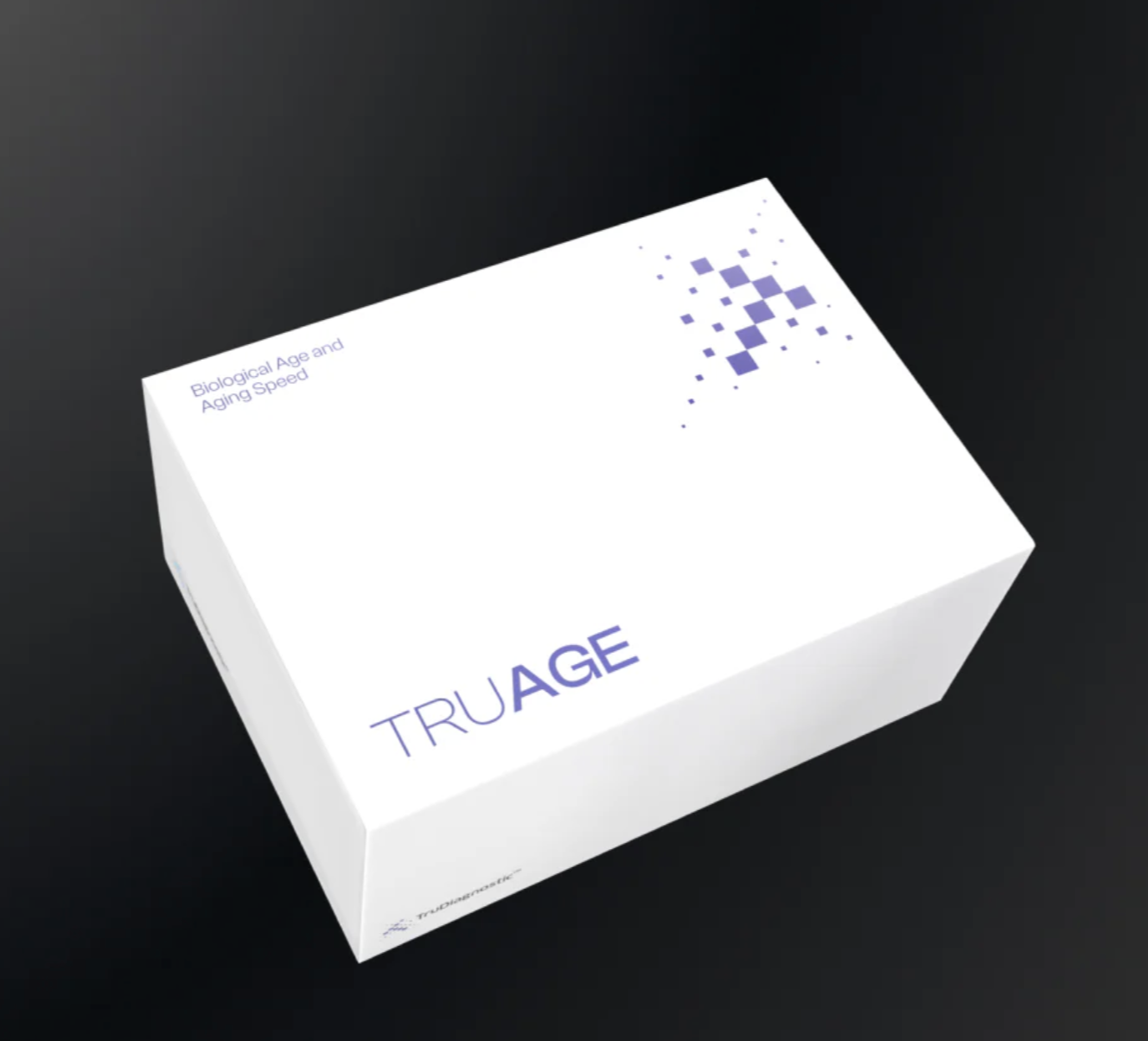
TruAge Biological Age Test
We Already have better tools to understand how we are ageing
At Biolume, we believe that personalised health shouldn’t be about vague metrics or one-size-fits-all advice. It should be about understanding what’s happening inside your body, in detail, so you can make meaningful, measurable changes.
Biological age may one day become a powerful tool. But right now, we already have access to better, more specific ways to understand how well you're ageing:
Are you inflamed? Check hsCRP, Amyloid A, and fibrinogen.
Are your metabolic pathways under pressure? Measure insulin, fasting glucose, HOMA-IR, and HbA1c.
Are your detox and antioxidant systems coping? Look at GGT, LDH, and markers like homocysteine.
Are your hormones balanced and responsive to life stage and stress? Track DHEAs, cortisol, testosterone, FSH/LH, and SHBG.
Is your cardiovascular system at risk? Start with ApoB, Lipoprotein(a), triglycerides, and HDL.
Are you nutritionally equipped to support cellular repair? Review vitamin D, zinc, magnesium, B12, and ferritin.
Each of these markers reveals something more precise than a broad biological age score ever could. And when tracked together over time, they show a much clearer picture of whether you’re ageing well, and where to intervene if you’re not.
So where does biological age sit right now?
While biological age testing is not inherently flawed, in its current consumer form, it lacks the precision, transparency, and actionability needed to guide meaningful health decisions. The underlying science is compelling, and in controlled research environments it continues to evolve, but for now we place it in the over-marketed hype basket.
Until the evidence improves — and until results can reliably explain why someone is ageing faster or slower, not just that they are — biological age remains more concept than tool.