NAD and Age: The Research Just Got More Complicated
NAD and Age: The Research Just Got More Complicated
For years, a single claim has held the NAD supplement industry together: NAD declines with age, that decline drives biological ageing, and topping it back up is a reasonable intervention. NMN capsules, NR powders, and IV drips priced up to $1,000 a session have all been sold on variations of this premise. The science behind it was always more complicated than the marketing. Now, two studies published in 2025 and 2026 have sharpened the complication considerably.

The decline narrative is not holding up in human blood
A significant study published in *Nature Metabolism* in May 2026, led by Professor Riekelt Houtkooper, Professor of Translational Metabolism at Amsterdam UMC, set out to resolve one of the most contested questions in the ageing field. Using a rigorously validated mass spectrometry system designed to account for real-world analytical variability, the research team measured NAD levels across seven independent human cohorts. That methodology matters: earlier studies producing conflicting results had used less rigorous measurement approaches, and drawing on seven independent cohorts rather than one or two gives the findings a weight previous work could not claim. The conclusion was unambiguous: whole-blood NAD levels remain remarkably stable with age and across lifestyle interventions. The implications land directly against a commercial narrative worth hundreds of millions of dollars globally. In a research briefing accompanying the paper, published May 2026, lead authors Maria Trętowicz and Professor Houtkooper were direct: > "Our findings provide important clarity in a field marked by conflicting reports, hype and commercial promises. Pragmatically, they indicate that whole-blood NAD+ levels cannot be used to track the aging process in humans and also provide new insight into the regulation of systemic NAD+ pools, which seem to be maintained within a narrow physiological range and are possibly buffered against variation. Consistent with this, whole-blood NAD+ levels do not reflect tissue-specific changes, such as those observed in aging muscle." A preprint from the University of Helsinki, led by Professor Anu Suomalainen Wartiovaara, Academy Professor and Sigrid Jusélius Professor of Clinical Molecular Medicine at the University of Helsinki and one of Europe's foremost researchers in mitochondrial medicine, reached consistent conclusions through independent measurement. In 237 healthy individuals, NAD levels did not decline with age. The study also found, against prior assumptions, that NAD levels were higher in obese individuals than in those of normal weight. A third line of evidence, using magnetic resonance spectroscopy rather than blood sampling, showed that NAD decline is not associated with chronological ageing in either human muscle or brain. These three bodies of evidence do not all say exactly the same thing. But they collectively dismantle the founding premise of a very large commercial category.
Where NAD does appear to drop
Professor Suomalainen Wartiovaara's team made a finding that deserves equal attention. NAD levels were low in patients with cancer, Alzheimer's disease, and Parkinson's disease, while healthy older individuals showed no such decline. This distinction matters considerably. Low NAD may be a feature of disease rather than of ageing itself. The two have been treated as equivalent in longevity marketing for years. They are not. Houtkooper and his co-authors were careful to note this does not make blood NAD biologically irrelevant. What it does make it is a poor proxy for ageing status. Blood NAD levels are not the same as tissue levels. NAD is regulated differently across organs, and muscle, brain, and liver may behave quite differently from what circulating blood reflects. The Helsinki preprint observed, in a smaller subset of participants, that muscle NAD did decline with age even when blood NAD held steady. Tissue-level data in living humans is difficult to collect at scale, and the field does not yet have it in a form that settles this.

Where NAD does appear to drop
NAD levels were low in patients with cancer, Alzheimer's disease, and Parkinson's disease, while healthy older individuals showed no such decline.
So does a healthy person benefit from NAD supplements?
This is the question most people actually want answered, and the honest response is that the evidence is thin. A major 2025 review published in *Nature Metabolism*, covering the full clinical evidence base for NAD precursor supplementation in human ageing, concluded that while preclinical studies support supplementation as a promising therapeutic strategy, human clinical trials have shown limited efficacy. Oral precursors, NMN and NR, do reliably raise circulating NAD in blood. Multiple independent randomised controlled trials confirm this. But raising the number is not the same as improving health, and the field is considerably better at demonstrating the former than the latter. On metabolic outcomes specifically, a 2025 systematic review and meta-analysis from the Chinese University of Hong Kong, covering 12 randomised controlled trials, found that while NMN supplementation significantly elevated blood NAD levels, most clinically relevant metabolic outcomes, including fasting glucose, cholesterol, and triglycerides, were not significantly different between the supplementation and control groups. The authors concluded that an exaggeration of NMN's benefits may exist in the field. Risk-of-bias assessment found concerns in seven of the twelve studies and high risk of bias in the remaining five. On ageing outcomes more broadly, the picture is consistent. A separate meta-analysis found that NAD precursor supplementation appears to have little effect on healthy people, while showing more meaningful benefit in patients with cardiovascular disease and dyslipidaemia. This pattern recurs across the literature: the intervention appears most relevant where there is already a deficit or disease process to address. One concern running through the research community is that healthy and fit individuals may already have sufficient NAD levels and that raising them further will have little to no beneficial effect. A forthcoming trial is set to test NMN's impact on aerobic capacity specifically in healthy people, which may begin to answer this directly. That data does not exist yet.
What about IVs?
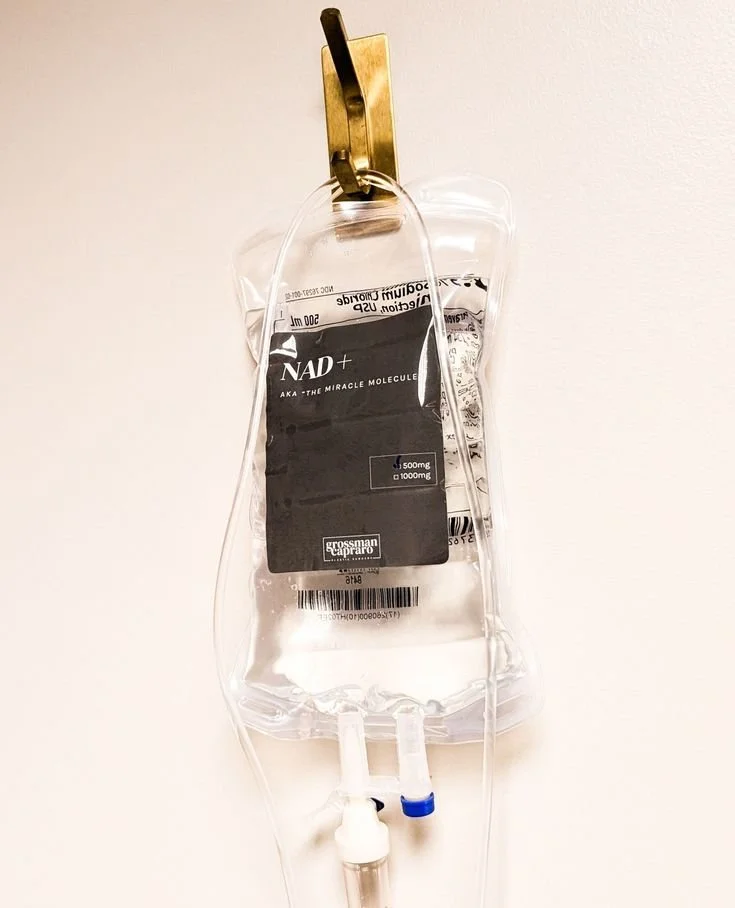
NAD IV infusions are priced as premium interventions and marketed largely on the strength of the oral supplementation literature, which is itself limited. The IV evidence base for healthy people is essentially non-existent. There is almost no published data on IV NAD infusions, and clinicians working in the space describe themselves as being in the early days of clinical trials. Safety data from small studies suggests short-term tolerability is reasonable under supervised conditions, but NAD infusions have been associated with side effects likely driven by supraphysiologic extracellular NAD levels and their pro-inflammatory effects, with limited evidence on how to optimise administration to minimise adverse effects. NAD itself has no easy route into cells from the bloodstream, which raises a practical question about what you are paying for when you receive it directly by drip. There is no high-level evidence that NAD drips improve energy, longevity, or metabolism in healthy adults.


Is there merit in an NAD blood test?
Based on the current evidence, not much, for most purposes. Professor Houtkooper and his co-author said so explicitly in their May 2026 research briefing: the test cannot be used to track the ageing process. If levels stay stable across age groups and lifestyle interventions in healthy people, the result is not telling you anything useful about how you are ageing or whether your habits are working. The Helsinki data reinforces this. A biomarker that moves in counterintuitive directions relative to known health status, higher in obesity than in lean individuals, is a poor diagnostic signal. And if muscle NAD can be declining while blood NAD holds steady, a blood test may offer false reassurance, measuring the compartment that happens to be accessible rather than the one that matters. Where a blood NAD test carries genuine signal is in disease contexts. Low levels in cancer, Alzheimer's disease, and Parkinson's disease suggest a potential role as a marker of disease burden or treatment response in clinical populations. That is a meaningfully different use case from the wellness framing it is routinely sold in.


But what if you are healthy and your result comes back low?
This is the most interesting gap in the current research, and the honest answer is that nobody knows yet. The studies showing stable NAD across age groups are population-level findings. They tell you the average healthy person does not decline, but they do not tell you that individual variation is meaningless. Some healthy people will sit at the lower end of the reference range, and the research has not yet established whether that carries any functional consequence or simply reflects normal biological variation with no clinical significance. The disease-state data is suggestive but not transferable. You cannot extrapolate from NAD depletion in Parkinson's disease to a low-normal result in a well person and draw the same conclusions. What the evidence does support is that oral precursors will raise your blood NAD if it is low. The biochemical intervention works. Higher NAD increases have been associated with modest improvements in walking distance and quality of life scores in middle-aged cohorts. But those studies were not conducted specifically in low-NAD healthy individuals, and effect sizes were modest. A low result in a healthy person is a hypothesis, not a diagnosis. It might mean something. It might be normal variation. The research to distinguish between those two possibilities has not been done, and the NAD testing and supplement industry has not waited for it.
Where this leaves things
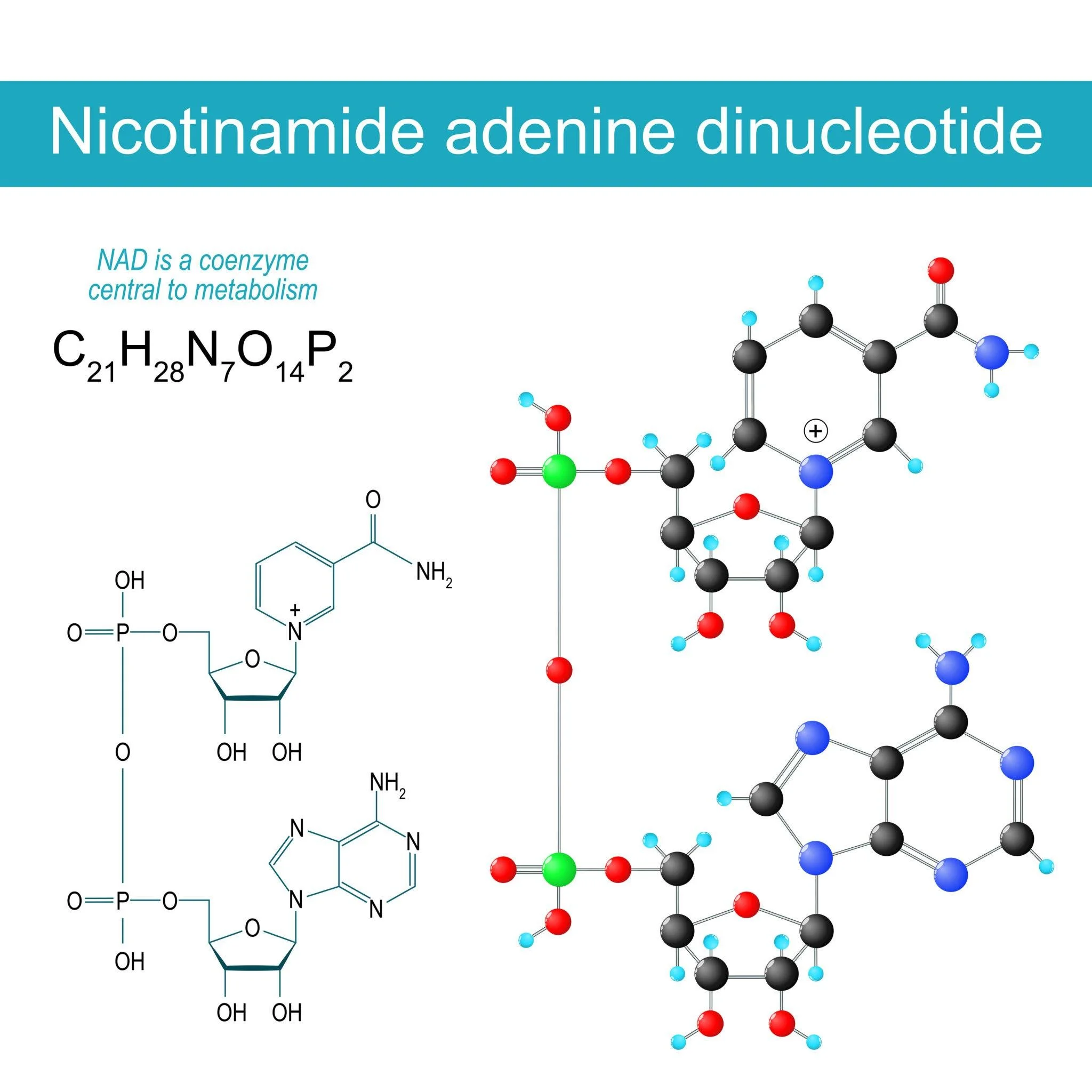
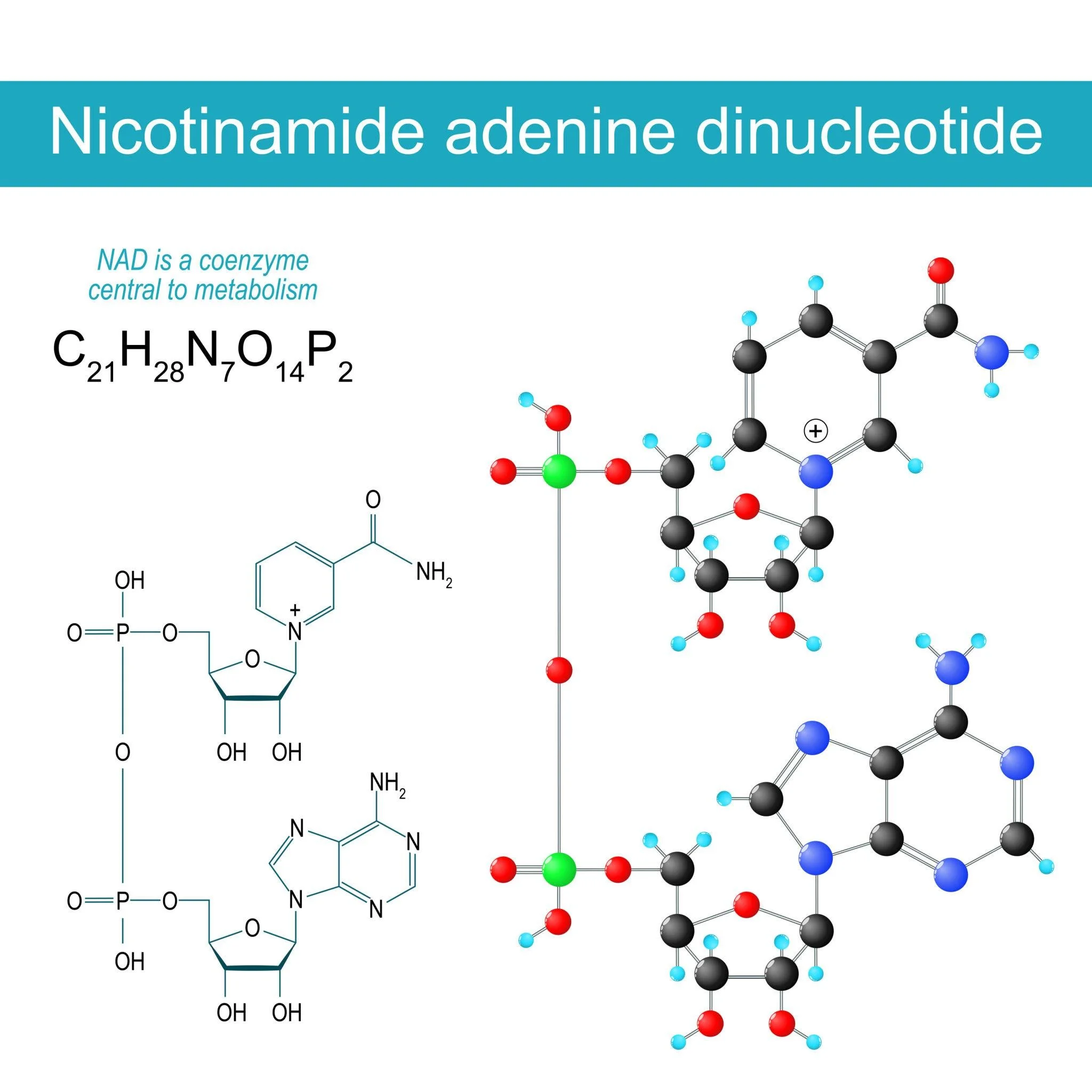
None of this means NAD biology is overstated as a field. NAD is a genuine and well-studied coenzyme, central to energy metabolism and DNA repair, and its relationship to disease states warrants continued investigation. What is overstated is the confidence with which the supplement and IV industry has applied that biology to the healthy population. Professor Houtkooper's team were careful to note that their findings do not imply whole-blood NAD lacks biological relevance entirely. What they do imply is that it is not the window into ageing it has been marketed as, and that the field needs to stop generalising across distinct compartments of human metabolism as though a single blood draw tells a complete story. If your NAD is not declining, you are not replacing something lost. You may be raising levels beyond your physiological baseline in ways that have not been shown to confer benefit, and for IV NAD specifically, may carry short-term inflammatory risk. The population with the clearest current rationale for NAD intervention is people with diagnosed conditions associated with depleted NAD: certain neurodegenerative diseases, metabolic disorders, and potentially post-illness recovery contexts. For everyone else, the case is still being built. That is not a reason to dismiss the molecule. It is a reason to be precise about what is known, and what is not, before spending $800 on a drip.


Sources
- Trętowicz M, Houtkooper RH et al. "Human whole-blood NAD+ levels do not vary with age or lifestyle interventions." *Nature Metabolism*, May 2026. doi: 10.1038/s42255-026-01537-5
- Euro L, Suomalainen Wartiovaara A et al. "Dynamics of blood NAD and glutathione in health, disease, aging and under NAD-booster treatment." University of Helsinki preprint, *bioRxiv*, 2025. doi: 10.1101/2025.02.24.639825
- Vinten KT, Houtkooper RH et al. "NAD+ precursor supplementation in human ageing: clinical evidence and challenges." *Nature Metabolism*, October 2025. doi: 10.1038/s42255-025-01387-7
- Zhang J, Poon ETC, Wong SHS. "Efficacy of oral nicotinamide mononucleotide supplementation on glucose and lipid metabolism for adults: a systematic review with meta-analysis on randomized controlled trials." *Critical Reviews in Food Science and Nutrition*, vol. 65, no. 22, 2025, pp. 4382–4400. doi: 10.1080/10408398.2024.2387324
- Dou Y et al. "Effects of NAD+ precursor supplementation on glucose and lipid metabolism in humans: a meta-analysis." *Nutrition & Metabolism*, 2022. doi: 10.1186/s12986-022-00653-9
- Trętowicz M, Scantlebery AML, Houtkooper RH. "Whole-blood NAD+ levels do not reflect healthy ageing." *Nature Metabolism*, 2026. doi: 10.1038/s42255-026-01540-w